Best 10 High Yield Savings Accounts in 2026 – Complete Beginner’s Guide
Discover the best 10 high yield savings accounts in 2026. Learn features, interest rates, benefits, and tips for beginners in simple English.
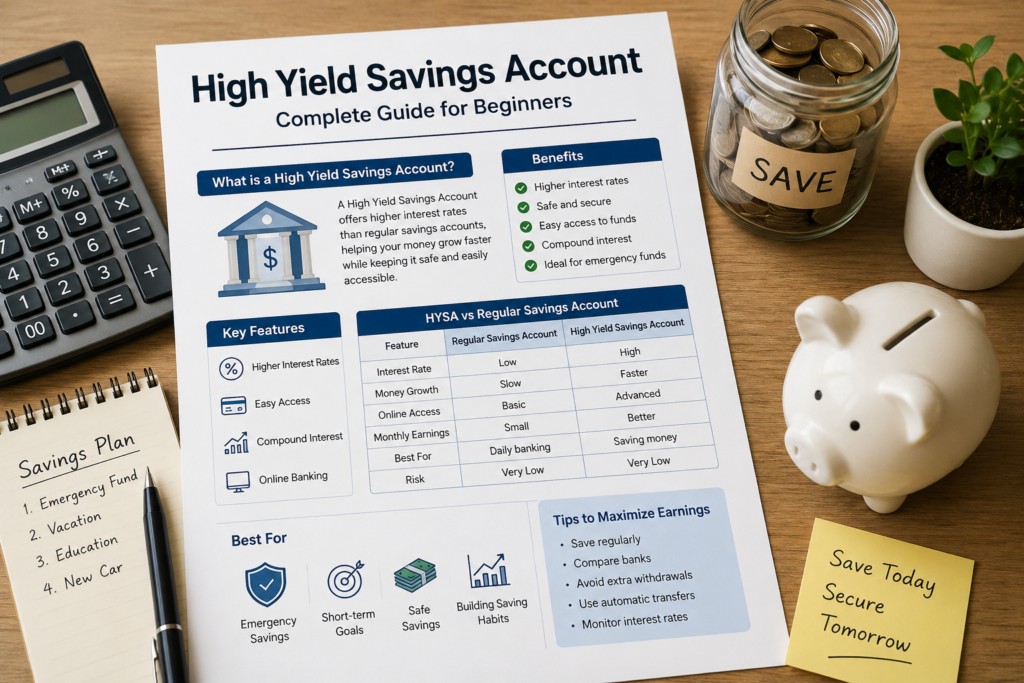
Introduction
Saving money is one of the most important financial habits. Many people keep their savings in a regular bank account, but the interest earned is usually very low. This is where a High Yield Savings Account (HYSA) becomes useful.
A High Yield Savings Account gives you a much higher interest rate compared to a normal savings account. It helps your money grow faster while still keeping it safe and easy to access.
In this detailed guide, you will learn everything about High Yield Savings Accounts in simple English, including how they work, benefits, risks, features, and how to choose the best account.
What is a High Yield Savings Account?
A High Yield Savings Account is a type of savings account that offers a higher interest rate than traditional savings accounts.
The bank pays you interest for keeping your money in the account. Because the interest rate is higher, your savings grow faster over time.
For example:
- Regular savings account interest: 0.5% per year
- High Yield Savings Account interest: 3% to 7% per year (depending on country and bank)
This means your money earns more without extra effort.
How Does a High Yield Savings Account Work?
The working process is simple.
- You open an account in a bank or financial institution.
- You deposit money into the account.
- The bank uses your deposits for lending and investments.
- In return, the bank pays you interest regularly.
The interest is usually calculated daily and paid monthly or quarterly.
The more money you save, the more interest you earn.
Example of Interest Earnings
Suppose you deposit ₹1,00,000 in a High Yield Savings Account with 6% annual interest.
After one year:
- Interest earned = ₹6,000
- Total balance = ₹1,06,000
If the interest compounds monthly, you earn even more because interest is added on both the original amount and previous interest.
Why High Yield Savings Accounts Are Popular
Many people choose High Yield Savings Accounts because they are:
- Safe
- Easy to use
- Better than keeping cash at home
- Higher earning than regular accounts
- Good for emergency funds
- Useful for short-term savings goals
These accounts are especially popular among beginners and conservative investors.
Main Features of High Yield Savings Accounts
1. Higher Interest Rates
This is the biggest advantage.
Traditional savings accounts usually offer low returns, while High Yield Savings Accounts provide much better interest rates.
2. Safety of Money
Most banks are regulated by government authorities. Your money is generally protected up to a certain limit.
This makes High Yield Savings Accounts safer than risky investments like stocks or cryptocurrency.
3. Easy Access to Funds
You can withdraw money when needed.
Most accounts provide:
- ATM access
- Online banking
- Mobile banking
- Bank transfer options
4. Compound Interest
Interest grows faster because of compounding.
Compounding means:
- You earn interest on your money
- Then you also earn interest on previous interest
This helps your savings grow over time.
5. Online Banking Support
Many High Yield Savings Accounts are available online.
Online banks often provide:
- Better interest rates
- Lower fees
- Faster digital services
Benefits of High Yield Savings Accounts
Better Returns Than Regular Savings
The biggest benefit is higher earnings.
A normal savings account may barely grow your money, but a High Yield Savings Account helps your savings increase steadily.
Ideal for Emergency Funds
Financial experts recommend keeping emergency savings.
A High Yield Savings Account is perfect because:
- Money stays safe
- Funds are easy to access
- Interest keeps growing
Low Risk
Unlike stock markets, your savings are not heavily affected by market crashes.
This makes it a low-risk financial option.
Helps Build Saving Habits
Because your money grows faster, you feel motivated to save more regularly.
No Investment Knowledge Needed
You do not need:
- Trading skills
- Market knowledge
- Investment experience
Simply deposit money and earn interest.
Difference Between Regular Savings and High Yield Savings Account
| Feature | Regular Savings Account | High Yield Savings Account |
|---|---|---|
| Interest Rate | Low | High |
| Money Growth | Slow | Faster |
| Online Access | Basic | Advanced |
| Monthly Earnings | Small | Better |
| Best For | Daily banking | Saving money |
| Risk | Very Low | Very Low |
Who Should Use a High Yield Savings Account?
Students
Students can safely save:
- Pocket money
- Scholarship funds
- Education savings
Working Professionals
Employees can use it for:
- Emergency funds
- Future goals
- Vacation savings
Families
Families often save for:
- Medical emergencies
- Children’s education
- Home expenses
Retired People
Retired individuals prefer safer savings options with stable returns.
Best Uses of a High Yield Savings Account
Emergency Savings
This is the most common use.
Experts suggest saving 3 to 6 months of expenses.
Short-Term Financial Goals
Examples:
- Buying a phone
- Vacation planning
- Wedding savings
- Car down payment
Parking Extra Cash
If you have extra money sitting unused, a High Yield Savings Account can help it earn interest.
Salary Savings
Some people transfer part of their monthly salary into these accounts to build wealth gradually.
Things to Check Before Opening an Account
Interest Rate
Compare different banks and choose better rates.
Even a small difference matters over time.
Minimum Balance Requirement
Some banks require a minimum balance.
Choose an account that matches your budget.
Withdrawal Limits
Some accounts limit monthly withdrawals.
Check the rules before opening.
Fees and Charges
Look for:
- Maintenance fees
- ATM fees
- Transfer fees
Too many charges can reduce earnings.
Online Banking Features
Good mobile apps and internet banking make account management easier.
Online Banks vs Traditional Banks
Online Banks
Advantages:
- Higher interest rates
- Lower fees
- Fast digital services
Disadvantages:
- No physical branches
- Cash deposit limitations
Traditional Banks
Advantages:
- Physical branch support
- Personal customer service
Disadvantages:
- Lower interest rates
- More charges
How Interest is Calculated
Interest depends on:
- Deposit amount
- Interest rate
- Compounding frequency
- Time period
The formula for compound interest is:
A =P(1+r/n)nr
Where:
- A = Final amount
- P = Principal amount
- r = Interest rate
- n = Number of compounding periods
- t = Time
This formula shows how savings grow over time.
Importance of Compound Interest
Compound interest is called the “power of saving.”
Example:
If you invest ₹50,000 at 6% yearly interest and continue saving regularly, your money can grow significantly after several years.
The earlier you start saving, the more benefit you get.
Are High Yield Savings Accounts Safe?
Yes, they are generally considered safe.
Most regulated banks provide security and protection for deposits.
However, always:
- Choose trusted banks
- Verify banking licenses
- Read terms carefully
Risks of High Yield Savings Accounts
Although safer than many investments, there are still some disadvantages.
Interest Rates Can Change
Banks may increase or decrease interest rates anytime.
Inflation Risk
If inflation is higher than your interest earnings, your purchasing power may decrease.
Withdrawal Restrictions
Some accounts limit how many times you can withdraw money monthly.
Lower Returns Than Investments
Stocks or mutual funds may provide higher returns over long periods.
But they also carry higher risk.
High Yield Savings vs Fixed Deposit
| Feature | High Yield Savings | Fixed Deposit |
|---|---|---|
| Flexibility | High | Low |
| Withdraw Anytime | Usually Yes | Penalty may apply |
| Interest Rate | Moderate to High | Fixed |
| Risk | Low | Low |
| Best For | Emergency savings | Long-term locked savings |
High Yield Savings vs Investment Accounts
| Feature | HYSA | Investment Account |
|---|---|---|
| Risk | Low | Medium to High |
| Returns | Moderate | Potentially Higher |
| Safety | High | Market Dependent |
| Access to Money | Easy | May fluctuate |
| Best For | Safe savings | Wealth growth |
Tips to Maximize Earnings
Save Regularly
Add money every month to increase growth.
Compare Banks
Different banks offer different rates.
Always compare before opening.
Avoid Extra Withdrawals
Frequent withdrawals reduce savings growth.
Use Automatic Transfers
Automatic saving helps maintain consistency.
Monitor Interest Rates
Banks may change rates. Stay updated for better opportunities.
Common Mistakes to Avoid
Ignoring Fees
High fees can reduce profits.
Choosing Only Big Banks
Some smaller online banks offer much better rates.
Not Reading Terms
Always check:
- Withdrawal limits
- Fees
- Minimum balance requirements
Keeping Too Much Idle Cash
High Yield Savings Accounts are excellent for safety, but long-term wealth growth may require investments too.
How to Open a High Yield Savings Account
The process is usually simple.
Step 1: Compare Banks
Research:
- Interest rates
- Reviews
- Features
Step 2: Prepare Documents
Usually required:
- ID proof
- Address proof
- Mobile number
- PAN card (in India)
Step 3: Fill Application
You can apply:
- Online
- Through mobile app
- In bank branch
Step 4: Deposit Money
Add your initial deposit.
Step 5: Start Saving
Your account begins earning interest immediately.
Best Strategies for Using High Yield Savings Accounts
Emergency Fund Strategy
Keep emergency money separate from daily spending.
Goal-Based Savings
Create separate savings goals:
- Travel
- Education
- Gadgets
- Wedding
Salary Split Method
Example:
- 70% spending
- 20% saving
- 10% investing
Transfer savings directly into your High Yield Savings Account.
Future of High Yield Savings Accounts
Digital banking is growing rapidly.
Future trends may include:
- Better mobile apps
- Faster transfers
- AI-based banking
- Personalized saving plans
- Higher online banking competition
This could improve customer benefits further.
Final Thoughts
A High Yield Savings Account is one of the safest and easiest ways to grow your money. It offers better interest than regular savings accounts while keeping your funds secure and accessible.
It is ideal for:
- Beginners
- Emergency savings
- Short-term goals
- Safe financial planning
Although returns are lower than risky investments, the stability and security make it an excellent financial tool.
If you want your savings to grow without taking big risks, a High Yield Savings Account can be a smart choice.
Start early, save regularly, and let compound interest work for your future financial success.
Best 10 High Yield Savings Accounts for Beginners
| Savings Account | Best For | Key Features | Minimum Balance | Beginner Friendly |
|---|---|---|---|---|
| Ally Bank Savings | Overall Savings | No monthly fees, strong interest rates | $0 | Yes |
| Marcus by Goldman Sachs | Simple Online Banking | Easy account management | $0 | Yes |
| Discover Online Savings | Cashback Banking Users | High APY with no fees | $0 | Yes |
| Capital One 360 Savings | Mobile Banking | Excellent app experience | $0 | Yes |
| SoFi Savings Account | Young Professionals | Savings + investing features | Low | Yes |
| American Express Savings | Trusted Brand | Competitive interest rates | $0 | Yes |
| Synchrony High Yield Savings | Long-Term Savers | ATM access available | $0 | Yes |
| Barclays Online Savings | Easy Online Access | No monthly maintenance fees | $0 | Yes |
| CIT Bank Savings Connect | Higher APY Seekers | Strong online savings tools | Low | Moderate |
| UFB Direct Savings | Maximum Interest Rates | High APY opportunities | Low | Yes |
FAQ Question
1. What is a High Yield Savings Account?
A High Yield Savings Account is a savings account that offers a higher interest rate compared to a regular savings account.
2. Is a High Yield Savings Account safe?
Yes, most accounts are protected by government-backed insurance like FDIC insurance in the USA or bank insurance policies in other countries.
3. Can beginners open a High Yield Savings Account?
Yes, beginners can easily open one online with minimal documents and low deposit requirements.
4. Which bank gives the highest savings interest?
Interest rates change regularly, but online banks usually offer higher rates than traditional banks.
5. Can I withdraw money anytime?
Most High Yield Savings Accounts allow easy withdrawals, but some banks may limit monthly transactions.
6. Do High Yield Savings Accounts have fees?
Many online banks offer zero monthly maintenance fees, but always check account terms before opening.
7. Is a High Yield Savings Account better than a fixed deposit?
It depends on your goal. Savings accounts offer flexibility, while fixed deposits may offer stable long-term returns.