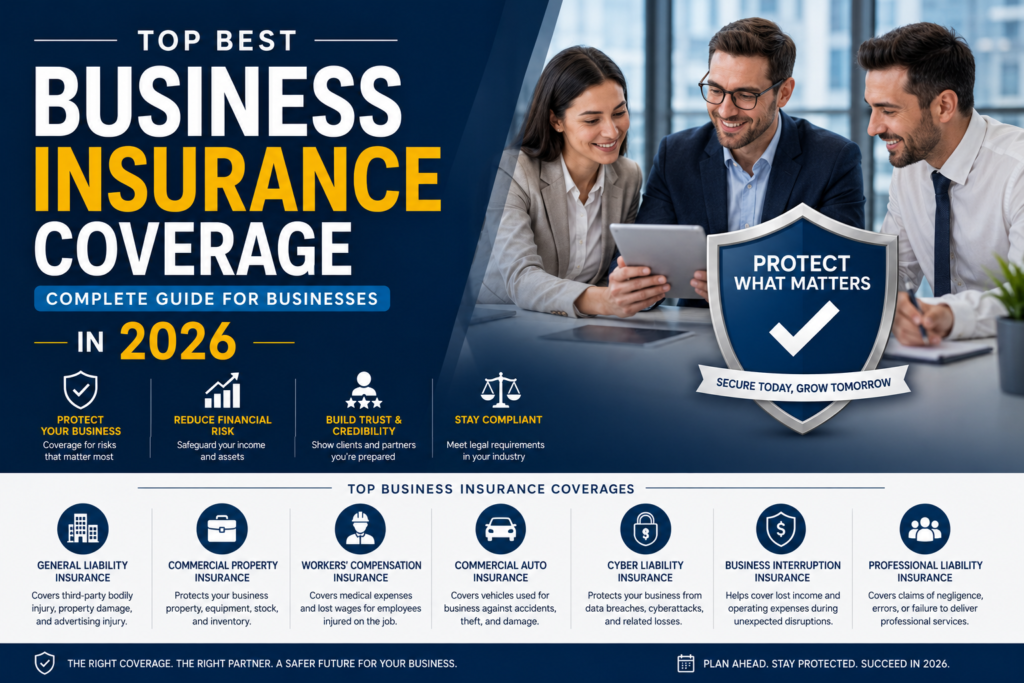
Business Insurance Coverage Guide 2026 | Types, Benefits & Costs
Learn everything about business insurance coverage in simple English. Discover types of business insurance, benefits, costs, and how to choose the right protection for your company in 2026.
Business Insurance Coverage: Protect Your Business from Financial Risks
Running a business comes with many opportunities, but it also comes with risks. A small accident, natural disaster, cyber attack, or legal issue can cause huge financial losses. This is why business insurance coverage is important for every business owner.
Whether you run a small shop, startup, online business, restaurant, or large company, business insurance helps protect your money, employees, property, and reputation.
In this detailed guide, you will learn:
- What business insurance coverage is
- Why it is important
- Different types of business insurance
- What business insurance covers
- What it does not coverHow much it costs
- How to choose the right insurance policy
- Tips to reduce insurance costs
- Common mistakes to avoid
This article is written in simple English so beginners can easily understand everything about business insurance coverage.
What is Business Insurance Coverage?
Business insurance coverage is financial protection for businesses against unexpected losses and risks.
If something bad happens to your business, the insurance company helps pay for the damage or loss according to your policy terms.
Business insurance can protect against:
- Property damage
- Fire accidentsTheft
- Employee injuries
- Legal claims
- Cyber attacks
- Natural disasters
- Business interruption
- Customer lawsuits
Without insurance, business owners may have to pay large expenses from their own pocket.
Why Business Insurance is Important
Many business owners think insurance is an unnecessary expense until a problem happens. One lawsuit or disaster can destroy years of hard work.
Here are the major reasons why business insurance is important.
1. Financial Protection
Insurance helps cover expensive losses and protects your business finances.
For example:
- A fire damages your office
- A customer slips and gets injured
- Your business data gets hacked
- Insurance can help pay repair costs, medical bills, and legal expenses.
2. Legal Requirement
Some types of business insurance are legally required in many countries.
For example:
- Workers’ compensation insurance
- Employee health insurance
- Commercial vehicle insurance
Without required insurance, businesses may face penalties and legal problems.
3. Builds Business Trust
Customers and clients trust insured businesses more.
Many companies only work with vendors or contractors who have proper insurance coverage.
4. Protects Employees
Employees are important assets for every business.
Insurance helps cover:
- Workplace injuries
- Medical expenses
- Compensation claims
This improves employee confidence and workplace safety.
5. Helps Business Continue After Disaster
Natural disasters, cyber attacks, or accidents can stop business operations.
Business interruption insurance helps businesses survive during difficult times.
Types of Business Insurance Coverage
There are many types of business insurance policies available. Different businesses need different coverage.
Let’s understand the most common types.
1. General Liability Insurance
General liability insurance is one of the most important business insurance policies.
It protects businesses against:
- Bodily injury claims
- Property damage claims
- Advertising injuryLegal defense costs
Example
A customer slips on a wet floor in your store and gets injured. The insurance may help cover:
- Medical bills
- Legal costs
- Compensation claims
Best For
- Retail shops
- Restaurants
- Offices
- Contractors
- Small businesses
2. Commercial Property Insurance
This insurance protects business property from damage.
It may cover:
- Buildings
- Furniture
- Equipment
- Inventory
- Computers
- Machinery
Covered Risks
- Fire
- Theft
- Storm damage
- Vandalism
Example
A fire damages your office equipment worth ₹10 lakhs. Property insurance may help pay repair or replacement costs.
3. Workers’ Compensation Insurance
This insurance protects employees if they get injured while working.
It usually covers:
- Medical expenses
- Lost wages
- Disability benefits
- Rehabilitation costs
In many countries, workers’ compensation insurance is legally required.
4. Professional Liability Insurance
This insurance is also called Errors and Omissions (E&O) Insurance.
It protects businesses that provide professional services.
Covered Claims
- Professional mistakes
- Negligence
- Wrong advice
- Service errors
Best For
- Consultants
- Lawyers
- Doctors
- Accountants
- IT professionals
5. Business Interruption Insurance
Sometimes businesses must temporarily close because of disasters.
Business interruption insurance helps replace lost income during that time.
It May Cover
- Lost profits
- Employee salaries
- Rent payments
- Utility bills
Example
A flood damages your shop and forces closure for two months. This insurance may help cover income losses.
6. Cyber Liability Insurance
Cybercrime is increasing rapidly in 2026.
Cyber liability insurance protects businesses from:
- Data breaches
- Hacking attacks
- Ransomware
- Online fraud
It May Cover
- Data recovery costs
- Legal expenses
- Customer notifications
- Cyber investigation costs
Best For
- Online businesses
- E-commerce stores
- IT companies
- Financial companies
7. Commercial Auto Insurance
Businesses using vehicles need commercial auto insurance.
It protects:
- Company cars
- Delivery vans
- Trucks
- Business transportation vehicles
Covered Risks
- Accidents
- Vehicle damage
- Injuries
- Theft
8. Product Liability Insurance
Businesses that manufacture or sell products may face lawsuits if products cause injury or damage.
Product liability insurance helps protect against such claims.
Best For
- Manufacturers
- Retailers
- Food businesses
- Cosmetic brands
9. Directors and Officers (D&O) Insurance
This insurance protects company directors and executives from legal claims related to management decisions.
Best For
- Large companies
- Startups with investors
- Corporate businesses
10. Key Person Insurance
Some businesses depend heavily on one important person.
Key person insurance helps businesses recover financially if that person:
- Dies
- Becomes disabled
- Cannot work
What Does Business Insurance Cover?
Coverage depends on the policy type.
Common business insurance coverage includes:
| Coverage Type | What It Covers |
|---|---|
| Property Damage | Buildings, equipment, inventory |
| Legal Expenses | Lawyer fees and court costs |
| Employee Injuries | Medical expenses and compensation |
| Customer Injuries | Liability claims |
| Cyber Attacks | Data breach losses |
| Natural Disasters | Fire, storms, floods (sometimes optional) |
| Theft | Stolen property or equipment |
| Business Interruption | Lost income during closure |
What Business Insurance Does NOT Cover
Business insurance also has exclusions.
Common exclusions include:
- Intentional damage
- Illegal activities
- Employee dishonesty
- Normal wear and tear
- War-related losses
- Nuclear risks
- Some natural disasters without extra coverage
Always read policy terms carefully.
How Much Does Business Insurance Cost?
Business insurance cost depends on many factors.
Main Factors Affecting Cost
1. Business Type
High-risk businesses pay more.
Example:
Construction companies usually pay more than consulting firms.
2. Business Size
Larger businesses with more employees often need higher coverage.
3. Location
Businesses in areas with high crime or natural disaster risk may pay more.
4. Revenue
Higher business revenue can increase insurance costs.
5. Coverage Amount
Higher coverage limits usually mean higher premiums.
Average Business Insurance Costs
| Insurance Type | Estimated Monthly Cost |
|---|---|
| General Liability | ₹2,000 – ₹10,000 |
| Property Insurance | ₹3,000 – ₹15,000 |
| Workers’ Compensation | Depends on employees |
| Cyber Insurance | ₹5,000 – ₹25,000 |
| Professional Liability | ₹4,000 – ₹20,000 |
These are estimated costs and may vary.
How to Choose the Right Business Insurance
Choosing the right policy is very important.
Follow these steps.
1. Understand Your Business Risks
Every business has different risks.
Ask yourself:
- Do customers visit your office?
- Do employees handle dangerous equipment?
- Is your business online?
- Do you store customer data?
Understanding risks helps choose proper coverage.
2. Compare Insurance Providers
Do not buy the first policy you see.
Compare:
- Premium costs
- Coverage limits
- Claim process
- Customer reviews
- Exclusions
3. Check Claim Settlement Ratio
A company with a high claim settlement ratio is usually more reliable.
4. Read Policy Details Carefully
Always read:
- Coverage inclusions
- Exclusions
- Deductibles
- Claim procedures
5. Choose Adequate Coverage
Underinsurance can create major financial problems during claims.
Choose coverage based on:
- Property value
- Business size
- Revenue
- Risk level
Benefits of Business Insurance Coverage
Financial Security
Protects businesses from large financial losses.
Peace of Mind
Business owners can focus on growth instead of worrying about unexpected problems.
Better Business Reputation
Insured businesses appear more professional and trustworthy.
Employee Protection.
Workers feel safer when businesses provide protection.
Easier Loan Approval
Banks may prefer businesses with insurance coverage.
Common Business Insurance Mistakes
Many businesses make mistakes while buying insurance.
Avoid these common errors.
1. Buying Cheap Coverage Only
Cheap insurance may provide limited protection.
Always focus on value, not only price.
2. Ignoring Cyber Risks
Even small businesses can become cyber attack targets.
Cyber insurance is becoming essential in 2026.
3. Not Updating Policies
Businesses grow over time.
Insurance should also be updated regularly.
4. Not Reading Exclusions
Many business owners only read benefits and ignore exclusions.
This can create surprises during claims.
5. Delaying Insurance Purchase
Waiting too long can expose businesses to unnecessary risks.
Business Insurance for Small Businesses
Small businesses often think insurance is only for large companies. That is not true.
Small businesses face risks such as:
- Theft
- Fire
- Customer lawsuits
- Data breaches
- Employee injuries
Even one lawsuit can financially damage a small business.
Affordable insurance options are available for startups and small businesses.
Business Insurance for Online Businesses
Online businesses also need protection.
Important insurance for online businesses includes:
- Cyber liability insurance
- Professional liability insurance
- Product liability insurance
E-commerce businesses face risks like:
- Hacking
- Payment fraud
- Customer data theft
How to File a Business Insurance Claim
Here is a simple claim process.
Step 1: Inform Insurance Company
Report the incident immediately.
Step 2: Collect Evidence
Take photos and gather documents.
Examples:
- Bills
- Police reports
- Medical reports
Step 3: Fill Claim Form
Submit all required details correctly.
Step 4: Insurance Investigation
The insurer may inspect damages or verify claims.
Step 5: Receive Compensation
If approved, the insurance company pays according to policy terms.
Tips to Reduce Business Insurance Costs
Improve Workplace Safety
Safer workplaces reduce insurance risks.
Bundle Policies
Many insurers offer discounts for multiple policies.
Increase Deductibles
Higher deductibles may lower premiums.
Train Employees
Proper employee training reduces accidents.
Install Security Systems
CCTV cameras and alarms can reduce theft risks.
Future of Business Insurance in 2026
Business insurance is changing rapidly because of technology.
New trends include:
- AI-based risk analysis
- Digital claim processing
- Cybersecurity coverage growth
- Customized insurance plans
- Faster online policy approvals
Insurance companies are also using automation to improve customer service.
Conclusion
Business insurance coverage is one of the most important investments for any business.
It protects against:
- Financial losses
- Legal claims
- Employee injuries
- Cyber threats
- Property damage
Whether you run a small startup or large company, the right insurance policy can protect your future and help your business survive unexpected problems.
Before buying insurance:
- Understand your risks
- Compare policies
- Read terms carefully
- Choose proper coverage
In 2026, businesses face many new challenges, especially cyber risks and economic uncertainty. Good business insurance coverage provides safety, confidence, and long-term stability.
FAQs About Business Insurance Coverage
1. What is the most important business insurance?
General liability insurance is considered one of the most important policies for many businesses.
2. Is business insurance mandatory?
Some insurance types are legally required depending on the country and business type.
3. How much business insurance do I need?
Coverage depends on your business size, industry, revenue, and risks.
4. Does business insurance cover natural disasters?
Some disasters are covered, but certain events like floods or earthquakes may need additional coverage.
5. Can small businesses afford insurance?
Yes. Many affordable insurance options are available for small businesses and startups.
6. What is cyber liability insurance?
Cyber liability insurance protects businesses from losses caused by hacking, data breaches, and cyber attacks.
7. How can I reduce business insurance premiums?
You can reduce costs by improving safety, bundling policies, training employees, and increasing deductibles.