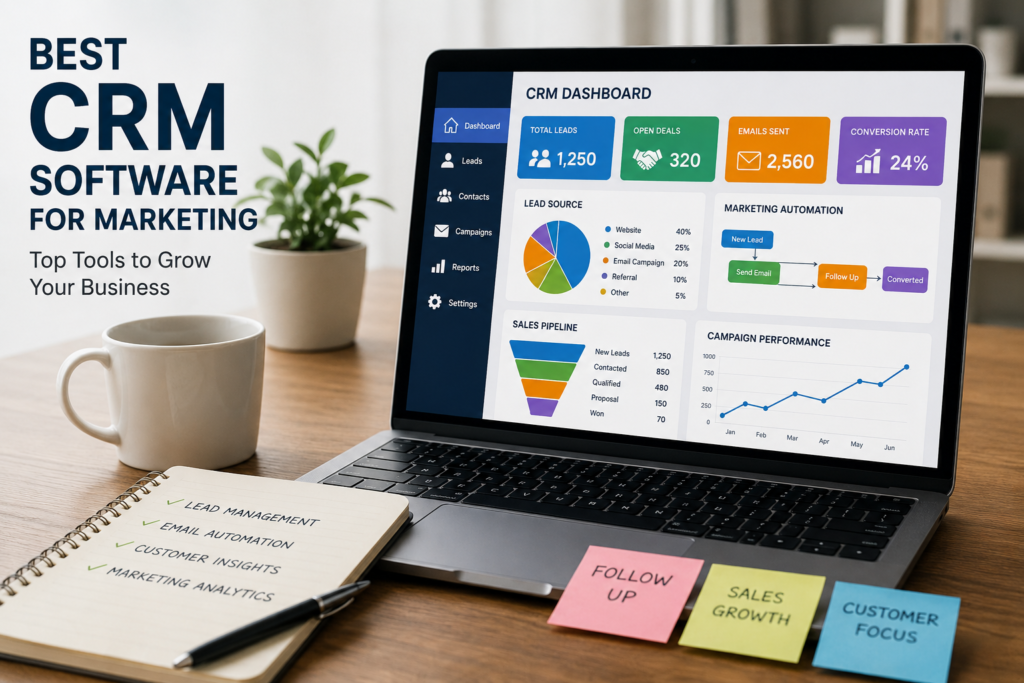
Best CRM Software for Marketing in 2026: Top Tools to Grow Your Business
Discover the best CRM software for marketing in 2026. Compare features, pricing, benefits, and find the perfect CRM solution to improve customer relationships and increase sales.
Introduction
In today’s digital world, businesses need better ways to manage customer relationships and marketing campaigns. Customer Relationship Management (CRM) software helps companies organize customer data, track interactions, automate marketing tasks, and increase sales.
A good CRM system allows businesses to understand customer behavior, improve communication, and create personalized marketing campaigns. Whether you run a small business or a large company, choosing the right CRM software can make a huge difference.
This guide will explain the best CRM software for marketing, their features, benefits, and how to choose the right one for your business.
What is CRM Software?
CRM (Customer Relationship Management) software is a tool that helps businesses manage customer information, track interactions, and improve relationships with existing and potential customers.
CRM software stores customer data in one place and allows sales and marketing teams to work together efficiently.
Key Functions of CRM Software
- Customer data management
- Lead tracking
- Email marketing automation
- Sales pipeline management
- Customer support
- Reporting and analytics
- Marketing campaign tracking
Why Marketing Teams Need CRM Software
Marketing teams use CRM software to:
- Understand customer behavior
- Create targeted campaigns
- Improve customer engagement
- Increase conversion rates
- Automate repetitive tasks
- Measure campaign performance
Without CRM software, managing customer information becomes difficult and time-consuming.
Benefits of CRM Software for Marketing
| Benefit | Description |
|---|---|
| Better Customer Insights | Understand customer needs and preferences |
| Marketing Automation | Automate emails and follow-ups |
| Higher Conversion Rates | Convert more leads into customers |
| Improved Communication | Keep customer interactions organized |
| Increased Productivity | Reduce manual work |
| Better Reporting | Measure campaign success easily |
| Customer Retention | Build stronger customer relationships |
Top CRM Software for Marketing
1. HubSpot CRM
HubSpot CRM is one of the most popular CRM platforms for marketers. It offers powerful marketing automation tools and a user-friendly interface.
Features
- Email marketing
- Lead management
- Marketing automation
- Landing pages
- Live chat
- Analytics dashboard
Pros
- Free CRM available
- Easy to use
- Excellent automation tools
- Great reporting features
Cons
- Advanced plans can be expensive
- Some features require premium upgrades
Best For
Small and medium-sized businesses.
2. Salesforce CRM
Salesforce is one of the most powerful CRM solutions available today. It offers advanced marketing and sales features.
Features
- AI-powered insights
- Customer journey tracking
- Email automation
- Lead scoring
- Marketing analytics
- Cloud-based platform
Pros
- Highly customizable
- Strong automation
- Advanced analytics
Cons
- Complex for beginners
- Higher pricing
Best For
Large businesses and enterprises.
3. Zoho CRM
Zoho CRM is an affordable solution that combines marketing and sales management in one platform.
Features
- Email marketing
- Lead management
- Workflow automation
- AI assistant
- Social media integration
Pros
- Affordable pricing
- Easy setup
- Good automation tools
Cons
- Interface can feel outdated
- Limited advanced features
Best For
Small businesses and startups.
4. Pipedrive
Pipedrive focuses on sales and lead management while offering useful marketing features.
Features
- Sales pipeline tracking
- Lead management
- Email integration
- Automation workflows
- Analytics reports
Pros
- Simple interface
- Excellent sales tracking
- Affordable plans
Cons
- Limited marketing tools
- Fewer customization options
Best For
Sales-focused businesses.
5. ActiveCampaign
ActiveCampaign combines CRM functionality with advanced email marketing automation.
Features
- Email automation
- Customer segmentation
- CRM management
- SMS marketing
- Predictive sending
Pros
- Powerful automation
- Excellent email marketing
- Good customer segmentation
Cons
- Learning curve for beginners
- Limited free options
Best For
Email marketing-focused businesses.
6. Monday CRM
Monday CRM provides visual project management combined with CRM capabilities.
Features
- Lead management
- Marketing campaign tracking
- Workflow automation
- Custom dashboards
- Team collaboration tools
Pros
- Modern interface
- Easy customization
- Strong collaboration features
Cons
- Can become expensive
- Some advanced features require upgrades
Best For
Marketing teams and agencies.
CRM Software Comparison Table
| CRM Software | Best For | Free Plan | Automation | Ease of Use |
|---|---|---|---|---|
| HubSpot CRM | Small Businesses | Yes | Excellent | Easy |
| Salesforce | Enterprises | No | Excellent | Moderate |
| Zoho CRM | Startups | Yes | Good | Easy |
| Pipedrive | Sales Teams | No | Good | Easy |
| ActiveCampaign | Email Marketing | No | Excellent | Moderate |
| Monday CRM | Marketing Teams | Limited | Good | Easy |
Features to Look for in Marketing CRM Software
When choosing CRM software, consider these important features:
1. Marketing Automation
Automates emails, follow-ups, and customer communication.
2. Lead Management
Tracks and organizes leads throughout the sales funnel.
3. Email Marketing Integration
Allows businesses to send personalized email campaigns.
4. Analytics and Reporting
Measures campaign performance and customer engagement.
5. Mobile Access
Provides access to customer information from anywhere.
6. Third-Party Integrations
Connects with tools like Google Analytics, Facebook Ads, and email platforms.
How to Choose the Best CRM Software
Follow these steps:
Define Your Goals
Identify what you need from CRM software.
Set a Budget
Choose software that fits your budget.
Consider Business Size
Some CRM tools work better for small businesses, while others suit enterprises.
Check Integration Options
Ensure the CRM integrates with your existing tools.
Test Free Trials
Always use free trials before making a final decision.
Common CRM Mistakes to Avoid
Choosing Based Only on Price
Cheap software may lack essential features.
Ignoring User Experience
Complicated systems reduce team productivity.
Not Training Employees
CRM success depends on proper usage.
Skipping Data Cleanup
Poor data quality affects results.
Future of CRM Software
CRM technology is evolving rapidly. Future trends include:
- Artificial Intelligence (AI)
- Predictive analytics
- Voice assistants
- Advanced automation
- Personalized customer experiences
- Omnichannel communication
Businesses adopting modern CRM solutions will gain a competitive advantage.
Conclusion
CRM software has become an essential tool for modern marketing teams. It helps businesses manage customer relationships, automate marketing activities, and increase revenue.
For beginners, HubSpot CRM and Zoho CRM are excellent choices. Larger organizations may benefit from Salesforce, while businesses focused on email marketing should consider ActiveCampaign.
The best CRM software depends on your business goals, budget, and marketing requirements. Carefully evaluate your options and choose a solution that supports long-term growth.
Frequently Asked Questions (FAQs)
1. What is CRM software?
CRM software helps businesses manage customer relationships, track interactions, and improve marketing and sales processes.
2. Which CRM is best for small businesses?
HubSpot CRM and Zoho CRM are among the best options for small businesses.
3. Is CRM software expensive?
Many CRM platforms offer free plans, while premium plans vary depending on features and business size.
4. Can CRM software improve marketing performance?
Yes. CRM software helps marketers automate campaigns, track customer behavior, and improve conversion rates.
5. What is the easiest CRM to use?
HubSpot CRM and Pipedrive are known for their user-friendly interfaces.
6. Does CRM software support email marketing?
Most modern CRM platforms include email marketing tools or integrations.
7. How does CRM increase sales?
CRM helps businesses manage leads effectively, improve customer communication, and identify sales opportunities.
8. Is CRM suitable for startups?
Yes. Many CRM solutions offer affordable plans specifically designed for startups and small businesses.
9. Can CRM software automate marketing tasks?
Yes. Most CRM platforms provide automation for emails, lead nurturing, and customer follow-ups.
10. What is the future of CRM technology?
The future of CRM includes AI-powered automation, predictive analytics, and personalized customer experiences.